

Private AI for energy workflows
Deployed in Texas oilfields
AVA & Field Ledger were critical to a live Texas oil & gas deployment supporting operations across several hundred wells. Patriot Labs used AVA & Field Ledger:
for secure on-site automation and processing
to automate voicemail and text message collection, daily reporting, and weekly roll-ups
to deliver business intelligence and predictive maintenance forecasting
This is AI built for operators and owners, not chatbot hype.

Deployed for advanced prediction
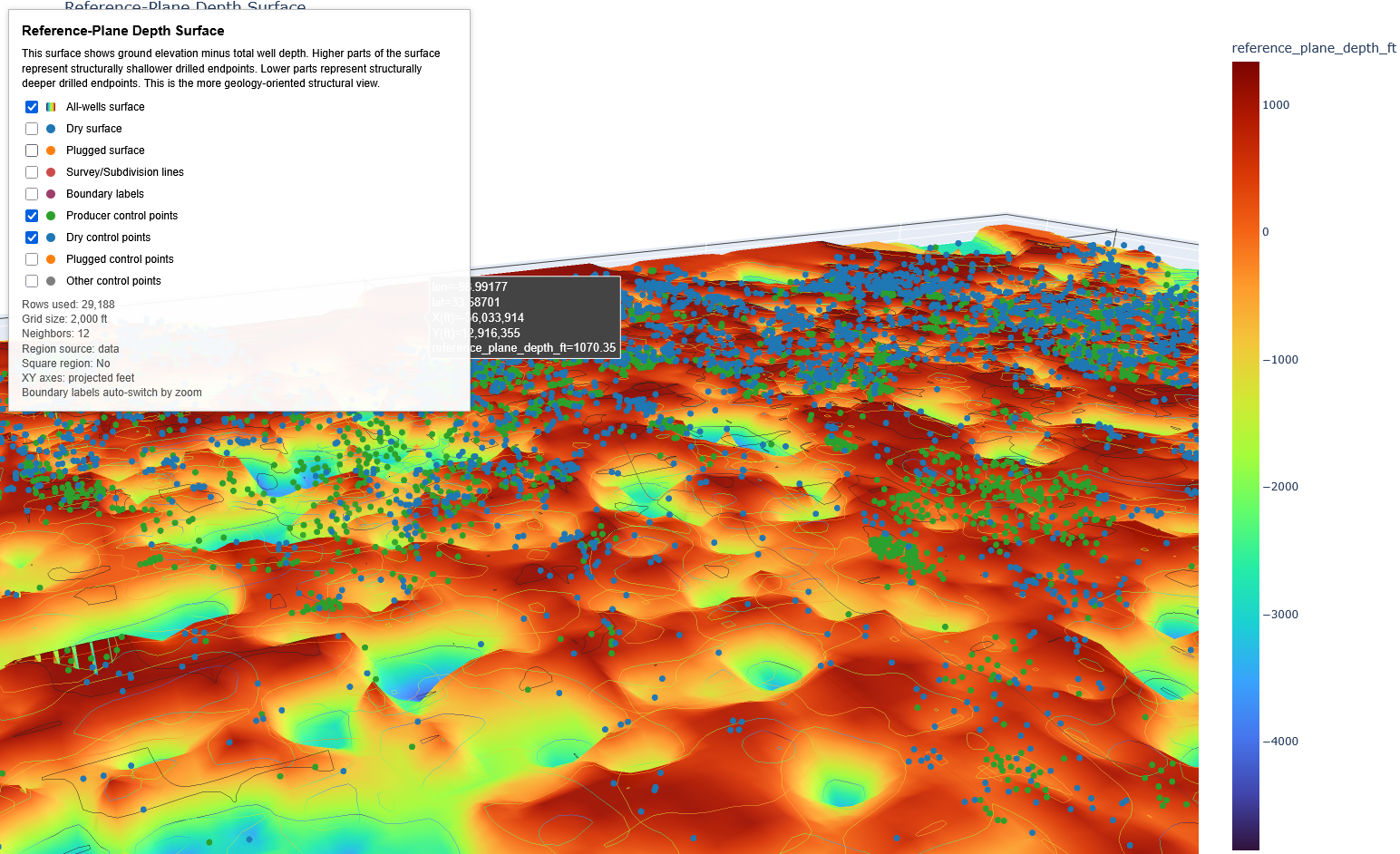
We are also using AVA for well drilling predictions by combining:
historical drilling data
geophysical data
geo surveys
drilling surveys
seismic surveys
The goal is improved prediction and execution for shallow wells, one of the most difficult and least predictable problems in the oil industry. Check out a recent fully automated AVA-enabled ROI lease analysis.
Private AI for Energy Operators
Energy operators live inside messy records: field messages, lease notes, production updates, maintenance logs, vendor invoices, well histories, public filings, spreadsheets, voicemails, and daily reports. AVA helps turn those records into source-linked operational intelligence.
Patriot Labs built AVA for operators who need fast answers but cannot afford loose AI. AVA is designed to run in customer-controlled environments, work against private operational records, cite the evidence it used, and keep humans in charge of decisions.
AVA Demonstrated
Patriot Labs demonstrated AVA on a large oilfield dataset spanning hundreds of active, dry, and capped wells. In Private / Offline Mode, AVA analyzed internal operational and maintenance records to answer high-value questions such as:
“Which wells have the most frequent and costly maintenance?”
“What recurring problems show up on lease X well number Y?”
“Compare lease X well number Y against the rest of the wells.”
“Which wells show repeated bearing, seal, gearbox, or tubing issues?”
“Which parts should we stock more of based on maintenance history?”
“Which wells should be inspected proactively next month?”
AVA then moved into Online Mode, retrieving relevant data from the Texas Railroad Commission, public records, and benchmark sources, and returned cited recommendations for deeper operational review.
The result: major time savings, faster maintenance intelligence, better proactive planning, and stronger decisions across inspections, inventory, and field operations.
Check out the demo video.
Proof examples
AVA is strongest when it is pointed at a measurable, repeatable workflow. Here are examples from our customers.
Daily and weekly reporting
Before AVA: 2 people spent 6 hours/week building daily field reports and weekly management rollups from messages, voicemails, notes, and spreadsheets.
After AVA: time dropped to 20 minutes/week for 1 person with AVA-generated source-linked drafts and human approval.
Maintenance risk ranking
Before AVA: 1 person spent 4 hours/week reviewing maintenance histories and field notes to identify wells needing attention.
After AVA: time dropped to 5-10 minutes/week with AVA ranking wells by repeated failures, aging issues, downtime notes, and unresolved follow-up with a single AVA prompt.
Inspection planning
Before AVA: 1 person spent 2 hours/week deciding which sites to inspect and why.
After AVA: time dropped to 5-10 minutes/week with AVA generating a prioritized inspection list and evidence trail with a single AVA prompt.
Public-data comparison
Before AVA: 2 people spent 10 hours/week comparing internal well files against public records and benchmark data.
After AVA: time dropped to 30 minutes/week for 1 person with AVA retrieving approved external data and citing both internal and public sources with a single AVA prompt.
Vendor and parts analysis
Before AVA: 2 people spent 4 hours/week reconciling repair logs, vendor invoices, and parts records.
After AVA: time dropped to 15 minutes/week for 1 person with AVA linking repeat repairs, high-cost vendors, parts trends, and supporting records with a single AVA prompt.
Other time-saving results that we have demonstrated include:
Lease and well research
Drilling or investment research support
Production anomaly review
Workover candidate review
Safety incident reconstruction
Environmental or regulatory follow-up
Equipment failure pattern analysis
Owner/investor reporting
That is the AVA model: take an expensive, repetitive, record-heavy workflow and make it measurable.
What AVA does for energy teams
AVA helps energy teams search, organize, and analyze operational records across wells, leases, assets, vendors, repairs, production notes, messages, and public data.
AVA can support:
Daily field report generation.
Weekly management rollups.
Well-by-well maintenance summaries.
Recurring failure and downtime analysis.
Inspection prioritization.
Parts, vendor, and repair trend analysis.
Internal records compared against Texas Railroad Commission and other approved public sources.
Lease, well, and drilling research support.
Exception flags for missing information, repeated issues, unresolved work, and conflicting records.
Designed for field reality
Energy records rarely arrive cleanly. A field update may be a voicemail. A maintenance note may be a text. A vendor record may be in a spreadsheet. A production issue may appear in three different places.
AVA is designed to bring those fragments into one reviewable workflow. AVA can ingest and organize:
Text messages.
Voicemails and transcripts.
Emails and attachments.
Spreadsheets.
Maintenance notes.
Well records.
Vendor invoices.
Lease and asset records.
Public filings and external research sources, when online mode is approved.
The result is not a black-box answer. It is a source-linked operational view.
Built for the objections energy buyers ask
Q: Does AVA touch operational control systems?
A: AVA can be deployed as a read-only analysis layer against approved exports, records, logs, and documents. It does not need to control production equipment to produce value.
Q: Can it run locally?
A: Yes. AVA is designed for customer-controlled deployment, including local and restricted environments.
Q: Can we use public records?
A: Yes, when approved. Online mode can retrieve public or approved external data while keeping internal records separate and cited.
Q: Can forecasts be trusted?
A: AVA’s maintenance and risk outputs should be measured against historical logs and actual outcomes. Patriot Labs recommends calling early outputs “risk ranking” or “decision support” until predictive performance is validated with customer data.
Q: Can management see the evidence?
A: Yes. AVA produces source-linked summaries so managers can trace conclusions back to records.
Your Call to Action
Bring the workflow that drains your field office every week: daily reports, maintenance review, inspection planning, public-record comparison, or vendor/parts reconciliation.
Patriot Labs will help you measure the baseline, deploy AVA against the real records, and prove whether the work drops from 6 hours/week to 20 minutes/week.